

FACT SHEET
The Future for Wildlife in the Missouri Breaks National Monument

Visit the Monument!  


Highlights from the 2007 Storytellers' Rendezvous!


BLM Releases Final Resource Management Plan

The Bureau of Land Management has released its "Proposed Resource Management Plan" for the Upper Missouri River Breaks National Monument, and it can be viewed at the BLM website. This document, when - and if, adopted, will be the guiding management plan for the Monument for well into the next decade. Because of the longevity of this management plan, Friends of the Missouri Breaks Monument (FOMB) is concerned about some of the plan's components, which we feel are incompatible with a landscape that has been designated with National Monument status. There is now a short, 30-day window of opportunity for members of the public to formally protest components of the RMP in which they are not in agreement. Following are some of the key issues that we feel offer inadequate protection to this special landscape:

Riparian Areas. As a result of poor grazing practices, much of the Monument's vegetative communities have been severely disrupted. It is estimated that today's aging cottonwood groves amount to only fifty-percent of what Lewis and Clark saw. Current management is not allowing replacement trees to survive in sufficient numbers, and BLM has stated that in the near future paddlers on the river will need to carry artificial shade, because the cottonwood groves will be gone. Important woody shrub species that sustain wildlife, such as chockecherry and red-osier dogwood, have been almost completely eliminated by livestock. Disappointingly, the RMP contains no plan to restore natural vegetative communities to this fragile and important ecosystem.

Airstrips. The Friends do not believe six airstrips are an appropriate feature in a National Monument. They have the potential to disturb wildlife, can be used by hunters to gain a technological advantage that is a deviation from the hunter's "fair chase" ethic and detract from the "remoteness and solitude" for which the Monument was designated.

Roads.The Monument contains many roads that were never authorized. Some came into being as a result of traffic driving cross country to an overview, checking for livestock, game or just to observe the scenery. Some were shortcuts. Some roads were authorized for a specific purpose, for example to access a mineral prospect, and should now be closed if the activity for which they were originally authorized is no longer occurring. Far too may of these roads appear to remain open.

Wilderness Areas.There are substantial areas of public land within the Monument which have wilderness values and potential. These include six Wilderness Study Areas (WSAs) and the rugged expanse of the Bullwhacker, said to have "some of the wildest country on all the Great Plains." Strong protection for these core lands is needed to prevent degradation of all the Monument resources. The BLM must manage these vital lands in a manner that protects their natural values.

Mineral Exploration. There can be no additional leases within the Monument.  However, the leases which are valid have the ability to drill extensively.  Gas wells bring seismic work, thumper trucks, compressors, roads, well pads, pools of water, some toxic to animals, and water trucks driving frequently between the wells and the disposal sites.  These are not small impacts.  Wells must be inspected, monitored and regulated. With the increase in gas prices there is also a major increase in potential drilling right outside the Monument.  Impacts on mule deer, pronghorn, sage grouse and other species caused by this expanding footprint of gas drilling are significant.

River Use.  With 149 miles of a Wild and Scenic River as the core of the Monument, at least one section without motors would be expected.  But there is only designation of a short section for a few days a week.   For hunters who want the opportunity to experience a motorless pursuit, for summer floaters who want the opportunity to experience some of our country's last areas of real solitude and remoteness, and for a primitive excursion into another era, this is it, a very brief section for a very brief period of time.


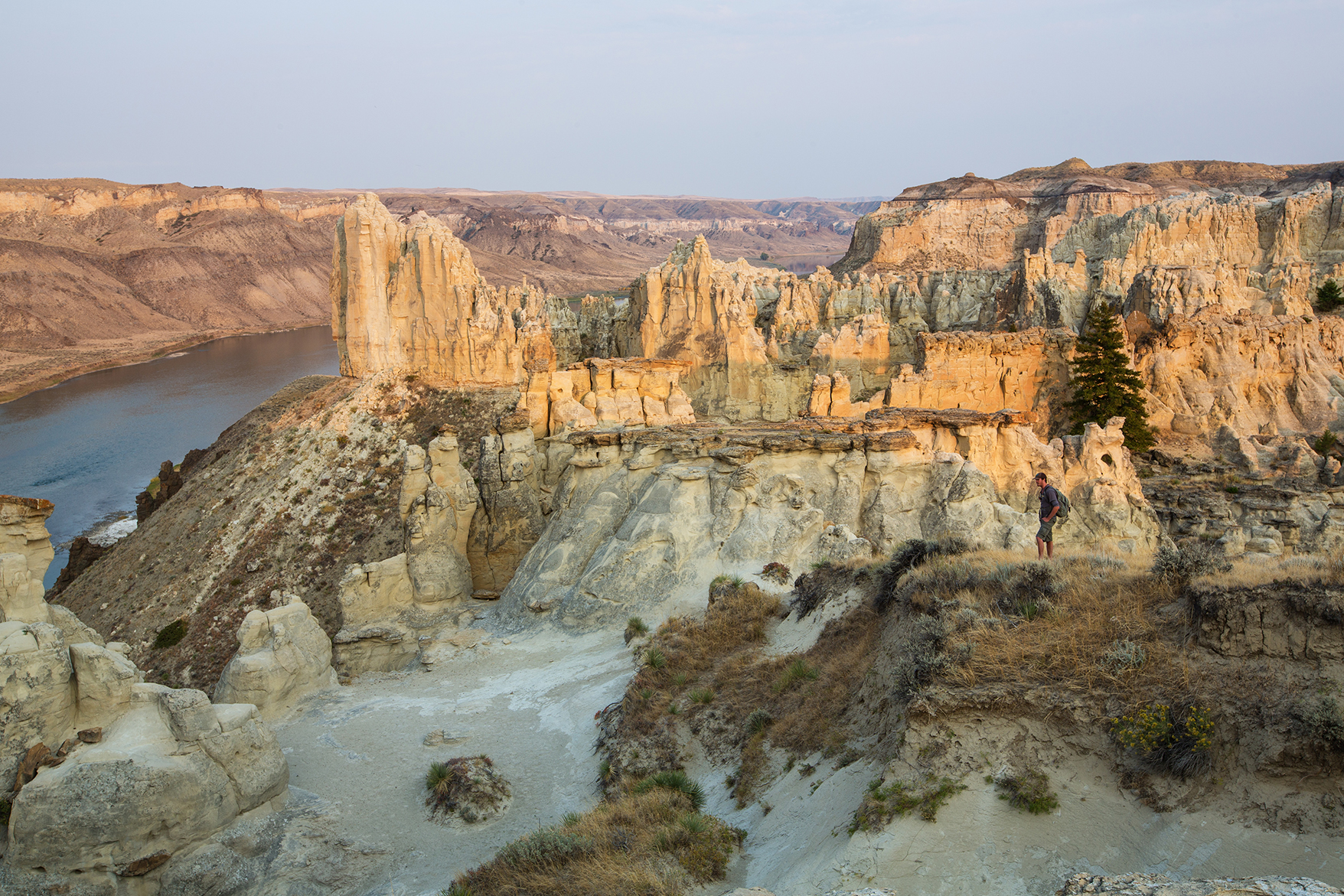
Photo by Rick Graetz


Durnig the RMP public comment period BLM received over 67,000 comments on the Draft Resource Management Plan. Fifteen volumes with 8,964 written comments, plus the transcripts of testimony from all the Draft RMP public meetings, are available for public viewing.  By far, most submissions were from people seriously concerned with the future management of the Monument and the Monument’s most pressing issues:  wildlife welfare, opportunities to experience a quiet, pristine landscape, inappropriate grazing management, protection for cultural and historical “objects of the Monument,” road density, and in general, following the expectations of the Proclamation.

For those who are not interested in filing a formal protest of the RMP, the Governor’s office is also receptive. They are always open to public input about Montana’s great outdoors.

Write the governor:
Governor Brian Schweitzer
PO Box 200801
Helena, MT 59620

One Lewis and Clark enthusiast said during a trip down the Monument’s Missouri River, “I’ve been all over the U.S. traveling and working with the Federal lands and this has got to be the best kept secret in America.  I never knew about this area.  It’s phenomenal!”

photo by Glenn Monahan

The Monument’s Wild and Scenic Missouri River continues to experience a reduction of cottonwoods.  The preservation of the mature cottonwoods along the river and regeneration for future cottonwood galleries is a major concern expressed by many people in their comments to the BLM.  Friends’ member, Glenn Monahan and his wife Nancy have taken a lead role in pursuing the plight of the cottonwoods along the Monument section of the Upper Missouri River.

In August, Friends’ volunteers surrounded selected mature cottonwoods with camouflaged chicken wire to deter the work of local beavers. For more information about this project, read Mary Jone's report or contact her at (406) 538-8506.


Free Map and Guide of Missouri River Breaks National Monument

With a little help from our friends in Bozeman--the Northern Rockies office of The Wilderness Society--a free map and guide of the Monument is being circulated throughout northcentral Montana and to anyone who requests a copy. Contact the Friends of the Missouri Breaks National Monument at 538-8506 or email Mary Jones if you want a copy.


You've heard of the NPS, the USFS, and the FWS? Ever hear of the NLCS?

Most Americans are familiar with the National Park System, but few people know that there's another fabulous conservation system, called the National Landscape Conservation System, that was established to recognize the American West's National Monuments and other hidden treasures. The Upper Missouri River Breaks National Monument is one of several landscapes that are a part of this great new system of public lands.

NLCS

If you want to visit, protect, or simply learn about these spectacular public lands, visit the NLCS Coalition's web site, http://discoverNLCS.org.

The NLCS Coalition consists of more than 50 local, regional, and national non-profit groups, including the Friends of the Missouri Breaks Monument, committed to building a stronger National Landscape Conservation System. Formed in 2002, the NLCS Coalition includes conservation groups large and small, historical preservation organizations, archaeologists, and landscape architects, among others.


FRIENDS OF THE MISSOURI BREAKS MONUMENT
224 W. Main, Suite 202
Lewistown, MT 59457
(406) 538-8506

EMAIL THE FRIENDS

Copyright © 2001-2005 - Friends of the Missouri Breaks Monument
All rights reserved.